

 English
 German
 Spanish
 Italian
 Japanese
 United states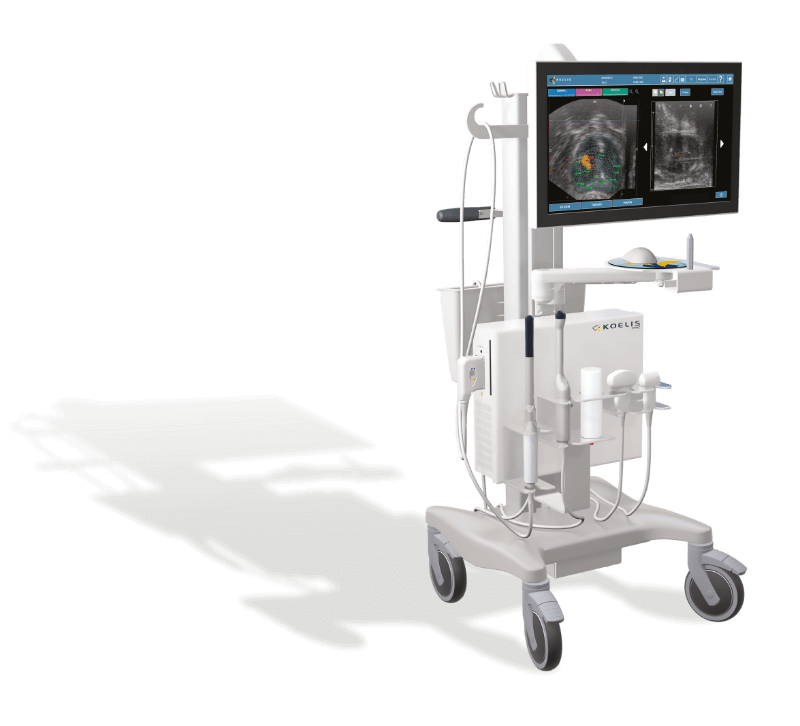
Detailed 3D Prostate Renderings Enable Accurate Biopsy and Future Intervention
The KOELIS Trinity system employs our proprietary Organ Based Tracking® (OBT®) technology that tracks the prostate, not the probe. OBT automatically compensates for patient and prostate movement with no need for an additional technician to manually realign imagery. The result is exceptionally accurate fusion biopsy as precise as 2.5 mm².
During an exam, the prostate is scanned using our unique 3D ultrasound technology. Segmented MRI is then fused to the ultrasound-generated 3D model or cartography of the prostate, displaying a reference volume of the prostate with the MRI targets. Every biopsy core location is tracked, mapped, recorded and stored for future reference and intervention. The map of the procedure can then be used to guide subsequent biopsies or aid in the delivery of future intervention.
Top Cancer Centers Trust KOELIS






















Compact Fusion Biopsy System Offers More Flexibility in Your Practice
Because the KOELIS Trinity® is designed with an integrated ultrasound system, the result is a much more compact footprint as compared to other fusion biopsy systems. KOELIS Trinity® also offers incredible flexibility with the ability to switch easily between transperineal prostate biopsy and transrectal prostate biopsy. When paired with compatible probes and accessories (and according to individual product labeling), KOELIS Trinity may support additional urologic workflows such as:
- – Irreversible electroporation (IRE)
- – High-Intensity Focused Ultrasound (HIFU)
- – Rectal spacer placement
- – Fiducial marker insertion
- – Ablative therapy planning and guidance for prostate cancer
- – Diagnostic abdominal and small parts ultrasound
Clinically Validated Prostate Fusion Biopsy Technology
The technology behind KOELIS Trinity® prostate fusion biopsy has been validated in international clinical studies and utilized in over 1 million biopsy procedures to date. More than 300 hospitals routinely use the KOELIS Trinity® system. With its advanced functionality, KOELIS Trinity® is surprisingly simple to use and integrate into your clinical workflow.
Want to learn more about Trinity? Contact us to learn more.

Maximum Value for Your Practice
With medical space at a premium, every square inch in your practice must provide value and help your team work efficiently. KOELIS Trinity® delivers strong value and efficiency in a mobile, all-in-one 3D MRI/ultrasound fusion biopsy system.

Small footprint
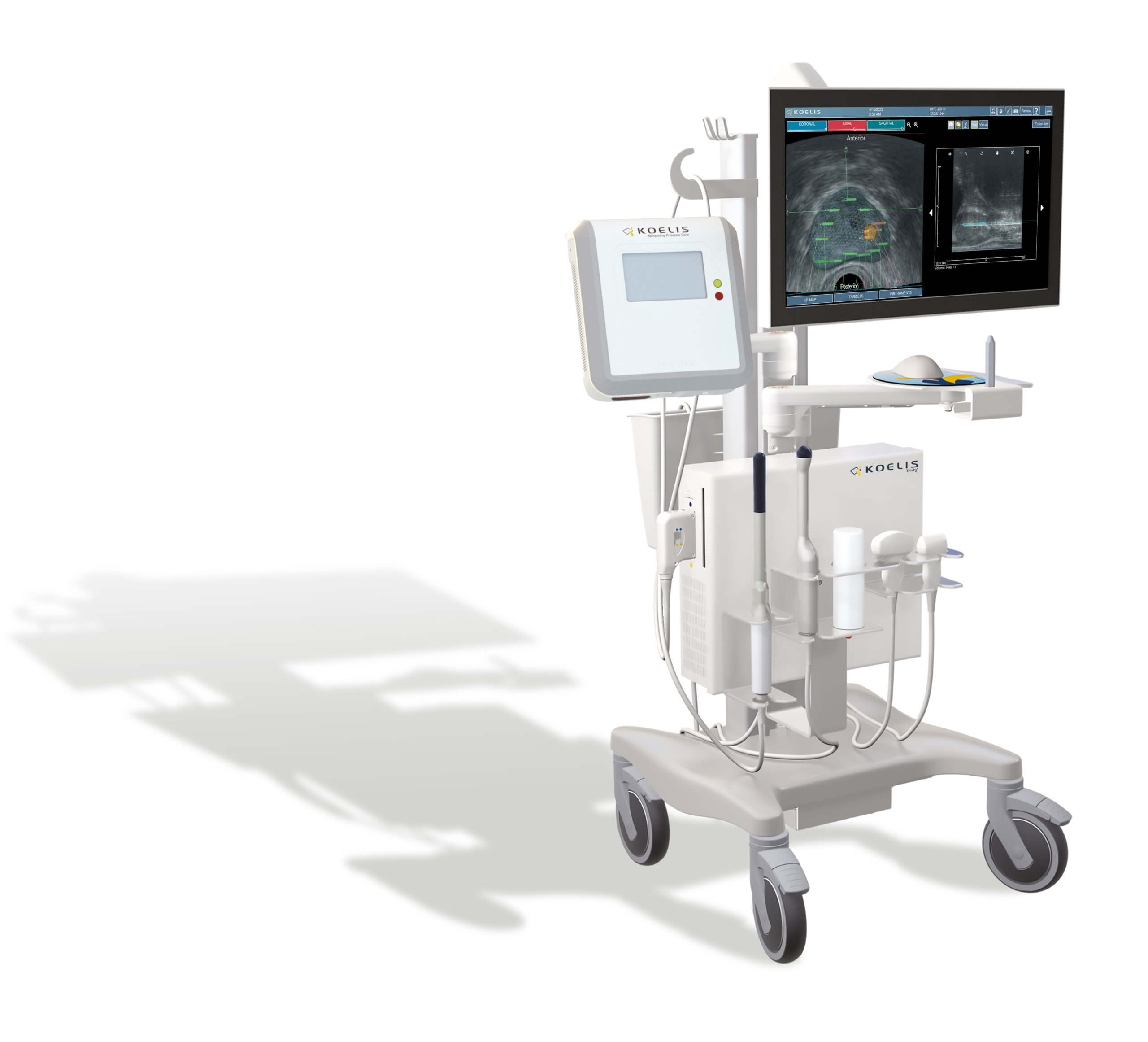
Because the KOELIS Trinity® is designed with an integrated 3D ultrasound system, the result is a highly compact footprint. And the ultrasound, with additional specialty probes, gives you the flexibility to perform a wide range of urologic exams.

Easy integration
With all of its advanced functionality, KOELIS Trinity® is surprisingly simple to use and integrate into your clinical workflow. When KOELIS Trinity® is not in use, the wheeled mobile platform can be easily stored until your next procedure.
Biopsy Targeting as Precise as 2.5 mm
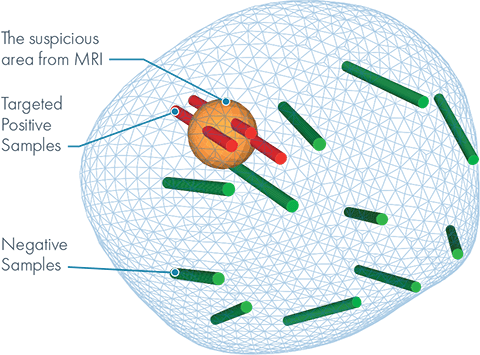
1. KOELIS Trinity® Automatically Compensates for Prostate and Patient Movement
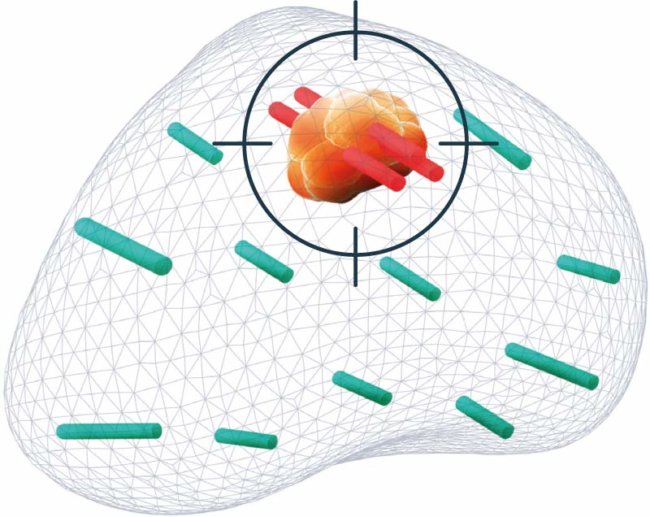
2. Improve Cancer Detection Rates with MRI Targeted Prostate Biopsy
While a transrectal or transperineal prostate biopsy is typically used to determine the presence of prostate cancer and establish a prognosis, published literature has reported improved detection of clinically significant prostate cancer with MRI-targeted biopsy approaches compared with systematic TRUS biopsy in selected populations3. This means adding a KOELIS Trinity system not only streamlines workflows, but also may result in better patient outcomes compared to non-fusion biopsy systems.
3. Ready to learn more?
If you're ready to learn more about KOELIS Trinity and integrating it into your practice, contact a team member in your area to discuss what KOELIS Trinity can do for you.
References:
2 Mean precision was 2.5 mm (95% confidence interval: 1.8 mm, 3.3 mm). Positive cores were closer to the center than were negative cores (dCC: 1.7 mm vs 3.1 mm, respectively; P = .025). Study showed that fewer cancers were detected with the cognitive technique than with the fusion technique and deformable MR imaging/transrectal US image registration system achieved higher precision and depicted cancer in more patients than did the cognitive freehand technique.
https://pubmed.ncbi.nlm.nih.gov/29361246/
3 Martini A, Cumarasamy S, Tewari AK. MRI-Targeted Biopsy for Prostate-Cancer Diagnosis. N Engl J Med. 2018 Aug 9;379(6):589. doi: 10.1056/NEJMc1807507. PMID: 30091345. https://pubmed.ncbi.nlm.nih.gov/30091345/.