

 English
 German
 Spanish
 Italian
 Japanese
 United states
What is a Prostate Biopsy? Types, Accuracy & More
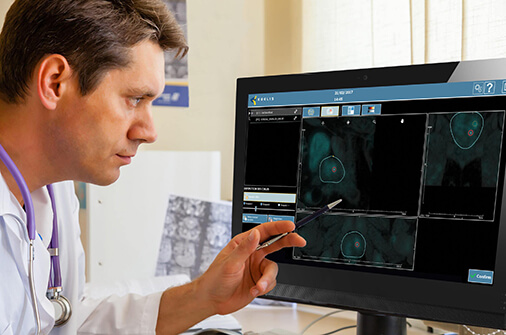
Do you want to learn more about the prostate biopsy procedure? This article discusses everything you need to know about the prostate biopsy, including the benefits, risks, side effects and more.
A prostate biopsy is the removal of tiny samples of prostate tissue to examine it for signs of prostate cancer. The prostate biopsy is the most effective method of screening for prostate cancer in the world today. When practiced using an MRI-ultrasound fusion system like KOELIS Trinity®, the prostate biopsy is highly accurate at detecting clinically-significant prostate cancer.
Why is the Prostate Biopsy Performed?
A prostate biopsy is the only medical procedure in which prostate cancer can be diagnosed conclusively.
Your doctor may recommend a prostate biopsy if:
- A PSA blood test shows that you have higher-than-normal prostate specific antigen (PSA) levels.
- Your doctor discovers a lump or abnormality in your prostate during a Digital Rectal Exam (DRE).
- You’ve had a previous prostate biopsy but are experiencing symptoms associated with prostate cancer
- You’re under active surveillance and require a subsequent biopsy for testing
How to Prepare for a Prostate Biopsy
Before a prostate biopsy, your doctor will inform you about the risks and benefits of the procedure along with side effects and post-biopsy treatment.
Several days before the biopsy, your doctor may tell you to stop taking any anticoagulants, NSAIDs, herbal supplements, and vitamins. Continue to take any prescription medicines unless your doctor advises against it. Remember to always consult your physician before any medication or lifestyle changes.
Prostate Biopsy Process
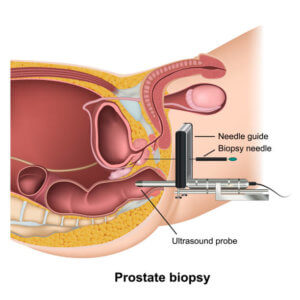
During the prostate biopsy procedure, the biopsy needle is inserted via the rectum (transrectal biopsy) or through the perineum (transperineal biopsy) under local or general anesthesia. In order to guide the needle inside the prostate, an ultrasound probe is inserted into the rectum (as shown below) and gives the physician a 3D visualization of the entire prostate gland on the KOELIS Trinity®.
The biopsy method will be decided by the doctor in consultation with the patient. Either the transrectal or transperineal method may be preferred according to the patient’s wishes, the doctor’s experience, the location of the necessary biopsies, and the available medical equipment. For instance, not all medical centers will have access to 3D MRI-ultrasound fusion systems like KOELIS Trinity®.
The 3D MRI-Fusion Biopsy
The development of MRI fusion has revolutionized biopsy procedures. During fusion, the MR image is fused with the live 3D ultrasound image on the biopsy device. This technology compensates for prostate deformation and patient movement so the prostate image remains accurate throughout the procedure. The urologist is now able to:
- Detect potential cancer before carrying out the biopsy
- Locate suspicious areas on the ultrasound image in real time during the biopsy
- Guide the biopsy needle directly into suspicious areas
- Record the position of the biopsies performed in 3D prostate mapping
- Targeted precision of 2.5 millimeters
The KOELIS Trinity® has set a new standard in prostate biopsy accuracy and reliability. Many leading cancer institutions trust KOELIS for detecting and treating prostate cancer.
Post-Biopsy Results
Once the prostate biopsy is complete, the samples taken are sent to a pathology lab to be examined. The pathology report will show whether or not cancer was detected, the aggressiveness of the cancer, and the Gleason score.
Additionally, patients are generally advised to abstain from strenuous activity for 1-2 days after the prostate biopsy procedure. Pain in the rectal area is common (after a transrectal procedure), while pain or discomfort near the perineum is also normal after a transperineal procedure. Patients will receive instructions for a follow up appointment to discuss the pathology report with their physician.
Normal Results
Normal results from the biopsy suggest that no cancer cells have been found. In this case, your doctor may recommend follow up visits and require you to report any urinary symptoms promptly. It’s important to understand that cancer may still be present even if undetected on a prostate biopsy, so close monitoring and constant contact with your physician is crucial.
Abnormal Results
A positive biopsy result means that cancer cells have been found. The lab will give the cells a grade called a Gleason score, which is the framework used to predict how fast the cancer will grow.
In this case, your doctor will talk to you about your treatment options, which may include monitoring cancer progression (active surveillance), focal therapy treatment, or radical prostatectomy (for advanced prostate cancer).
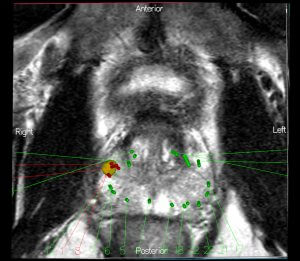
Above: A prostate biopsy targeting map on MRI with KOELIS Trinity. Note red dots are successful lesion targets.
Risks, Complications, and Side Effects
A prostate biopsy generally takes place without complications, yet side effects may be observed:
- Pain and discomfort around the sampled area
- Difficulty urinating
- Bleeding of the prostate
- Presence of blood in urine/sperm
- Risk of infection (higher for transrectal biopsy)
Final Thoughts
The prostate biopsy remains the only conclusive way to test for the presence of prostate cancer. Since nearly 1 in 8 men will receive a prostate cancer diagnosis in their lifetime, knowing and understanding the prostate biopsy procedure is essential.
Do you want to learn more about prostate cancer treatment? Visit the KOELIS Resource Guide for additional information and helpful tools to navigate prostate cancer.