

 English
 German
 Spanish
 Italian
 Japanese
 United states
In 2026, there are more options than ever for advanced prostate cancer treatment, but sorting through them can feel overwhelming, especially if you’ve heard terms like stage 4 prostate cancer or metastatic prostate cancer treatment.
But navigating an advanced prostate cancer diagnosis doesn’t have to be so overwhelming. In fact, advanced prostate cancer is treatable and treatment options exist to slow cancer growth and extend lifespan¹.
In this article, we will discuss advanced prostate cancer, treatment options, recent advances in prostate cancer treatment, and more.
Understanding Advanced Prostate Cancer
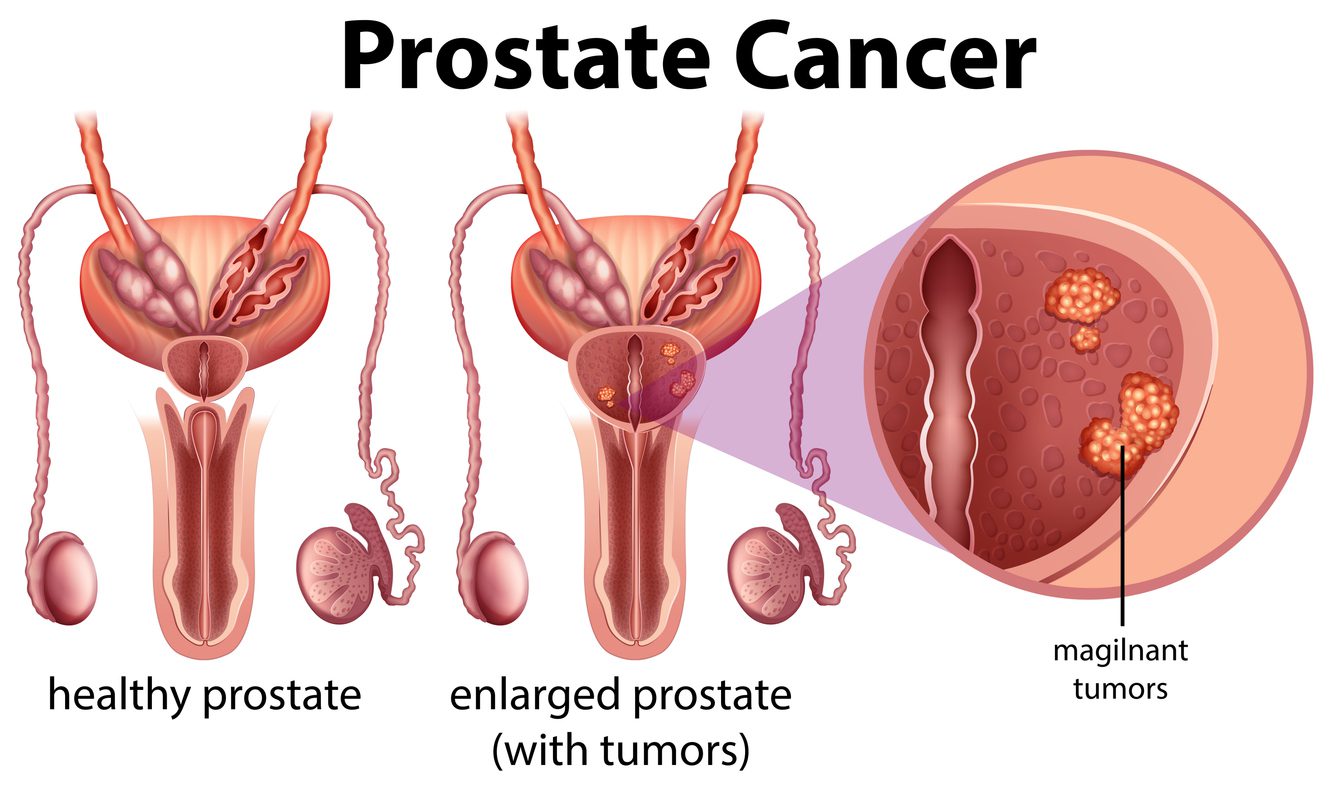
Above: Illustration of healthy prostate gland vs. prostate with tumors present.
“Advanced” prostate cancer is an umbrella term that usually means the cancer is harder to treat with only local therapies (like surgery or focal therapy). Sometimes it means the cancer has grown outside the prostate area, and other times it means it has returned after earlier prostate cancer treatments.
When prostate cancer spreads, it’s called prostate cancer metastasis. A common question is “where does prostate cancer spread to and where does prostate cancer tend to metastasize to?” Prostate cancer often spreads to the bones or lymph nodes, which is why you may hear your doctor mention prostate cancer spreading to these areas after imaging tests.
It’s important to understand that “advanced” does not mean “no options.” Many prostate cancer treatments can slow the disease down, reduce symptoms, and help people live longer with a good quality of life.
“Prostate cancer often spreads to the bones or lymph nodes, which is why you may hear your doctor mention prostate cancer spreading to these areas after imaging tests.”
Advanced Prostate Cancer Treatment Options

Advanced prostate cancer treatment options usually fall into a few main categories, and many people receive a combination over time. The foundation for many cases of advanced prostate cancer treatment, especially treatment for metastatic prostate cancer, is therapy that lowers or blocks testosterone (often called hormone therapy).
Another major option is chemotherapy for prostate cancer. Chemotherapy isn’t always the first step for everyone, but it can be very helpful for certain people with metastatic prostate cancer treatment causing symptoms or not responding well enough to hormone-based approaches alone. Some patients also benefit from targeted forms of radiation (either to the prostate itself or to painful bone spots) because even in stage 4 prostate cancer, treating specific areas can sometimes improve comfort and quality of life.
New Advanced Prostate Cancer Treatment

One of the most promising parts of prostate cancer treatment is that there are constantly new clinical trials and research intended to advance treatment options and improve patient outcomes. In fact, there are roughly 1,000 clinical trials focused on prostate cancer ongoing in the United States today².
Here are several new advanced prostate cancer treatments emerging for patients looking to eliminate harmful side effects while stopping the spread of cancer:
PARP Inhibitors
The use of PARP inhibitors has transitioned from a niche “last-resort” option to a cornerstone of personalized prostate cancer care. For a patient, the most important thing to know is that these drugs are “smart” therapies, meaning they only work if your cancer has specific genetic “weaknesses.”
Think of your cancer cells as a house that needs constant repairs to stay standing. Normal cells have two “repair kits” for their DNA. Some prostate cancers have a mutation (like BRCA1 or BRCA2) that breaks the first kit³. PARP inhibitors are drugs that come in and disable the second “backup” kit (the PARP protein). Without any way to fix its DNA, the cancer cell collapses and dies, which is a process scientists call synthetic lethality.
Immunotherapies
Immunotherapy for advanced prostate cancer has evolved into a precision tool, moving away from a general approach toward treatments tailored to your body’s specific immune signature. While prostate cancer is often good at hiding from the immune system, new strategies are helping to “turn on the lights” so your white blood cells can find and destroy the tumor⁴.
The most established option is Sipuleucel-T (Provenge), a personalized vaccine created from your own immune cells. In a process similar to dialysis, your blood is collected, “trained” in a lab to recognize a prostate-specific protein (PAP), and then infused back into your body to jumpstart an attack⁵.
Advanced Prostate Cancer Outlook
The outlook for advanced prostate cancer has moved from a conversation about terminal illness to one about chronic disease management. While a cure for metastatic disease remains elusive, the rapid introduction of targeted therapies like PARP inhibitors has significantly extended both the length and quality of life for many patients.
In 2026, the American Cancer Society (ACS) reported a historic milestone: the 5-year relative survival rate for all cancers combined reached 70% for the first time⁶. For prostate cancer specifically, the numbers vary significantly based on how far the cancer has traveled at the time of diagnosis.
Because men are now living much longer with advanced prostate cancer, the medical community has shifted its focus to quality of life. Now, “survivorship” is no longer just for those who are cancer-free; it includes those living long-term with metastatic disease⁷.
The Bottom Line
Advanced prostate cancer treatment has come a long way since the first prostate removal surgery in 1904. Thanks to ongoing clinical trials and a growing body of research, scientists are developing more treatment options that aim to target advanced prostate cancer at different stages.
Are you or a loved one facing an advanced prostate cancer diagnosis? KOELIS is a leader in prostate cancer diagnosis and treatment. Ask your urologist about KOELIS, or find a certified provider in our network with our KOELIS Locator.
References:
1 – Prostate Cancer. Mayo Clinic. https://www.mayoclinic.org/diseases-conditions/prostate-cancer/diagnosis-treatment/drc-20353093
2 – Emerging Therapies for Prostate Cancer. Prostate Cancer Foundation (PCF). https://www.pcf.org/patient-support/treatment/advanced-treatment/emerging-therapies/
3 – PARP inhibitors. Cancer Research UK. https://www.cancerresearchuk.org/about-cancer/treatment/targeted-cancer-drugs-immunotherapy/parp-inhibitors
4 – Zhou Z, Lao Y, Zhao K, Cheng L, Xiao X, Li W, Liu S, Kong X and Dong Z (2026) Advancing CAR-T therapy in prostate cancer: overcoming the tumor microenvironment and enhancing efficacy. Front. Oncol. 16:1659869. doi: 10.3389/fonc.2026.1659869. https://www.frontiersin.org/journals/oncology/articles/10.3389/fonc.2026.1659869/full
5 – Immunotherapy. ZERO Prostate Cancer. https://zerocancer.org/treatment-options/systemic-therapies/immunotherapy
6 – ACS Annual Statistics Report: Milestone 70 Percent 5-Year Survival Rate for all Cancers Combined; Largest Gains for Advanced and Fatal Cancers. January 13, 2026. https://pressroom.cancer.org/cancer-statistics-report-2026
7 – New ACS Data Shows Cancer Survival Rate Hit a Historic 70%. Sabrina Serani. February 17, 2026. https://www.targetedonc.com/view/new-2026-acs-data-show-cancer-survival-rates-hit-a-historic-70-