

 English
 German
 Spanish
 Italian
 Japanese
 United states
Living with prostate cancer isn’t a death sentence. In fact, most men go on to live happy and healthy lives after discovering their prostate cancer. Additionally, many men are on active surveillance, which is the constant monitoring of prostate cancer progression to determine if a more aggressive treatment approach is necessary. While active surveillance is primarily used for low-to-intermediate risk prostate cancer, living after a more advanced degree of cancer, like stage 4, is still possible with modern treatment options.
Whether you’re a prostate cancer patient, a loved one of someone with prostate cancer, or just curious about prostate cancer, understanding the life expectancy of those with stage 4 prostate cancer and other aggressive cases of cancer is important for knowing what to expect at each stage.
This article focuses on the various stages of prostate cancer, visual representations of prostate cancer stages, and answers the question of how long can you live with stage 4 prostate cancer.
“Roughly 50% of men survive with stage 4 prostate cancer after 5 years. However, prostate cancer is often caught and treated early and gives patients a high chance of a positive prognosis.”
Prostate Cancer Stages
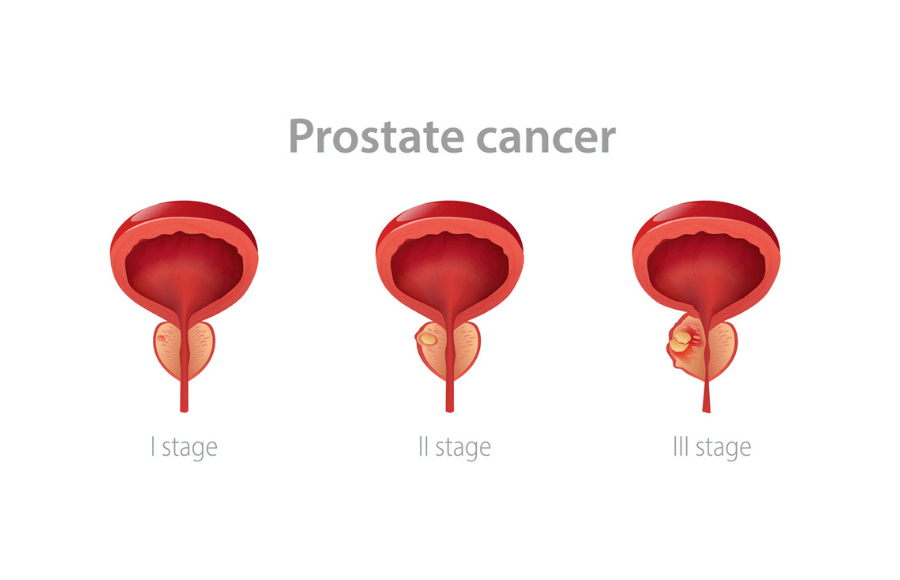
Above: Tumor growth in prostate cancer stages 1 to 3, from localized to advanced.
Like other types of cancer, prostate cancer is typically described in stages that reflect how far the cancer has spread and its aggressiveness. Another main reason to describe prostate cancer in stages is to determine the best treatment options for each specific cancer, ranging from active surveillance, focal therapy, total removal of the prostate (radical prostatectomy), and other advanced prostate cancer treatments.
Prostate cancer stages are grouped into four distinct categories, including:
Stage 1 – Localized and Early Staged
With Stage 1 prostate cancer, the cancerous lesion is very small and is confined only to the prostate, meaning it hasn’t yet spread to surrounding tissue or structures. This type of prostate cancer may be missed on a digital rectal exam (DRE) and may be found incidentally during surgery for another health condition.
Stage 1 prostate cancer indicates a slow-growing cancer. This stage is also where active surveillance is common, which allows your physician to monitor the progression of the disease. In many cases, tumors remain insignificant and no further treatment is required.
Life expectancy of men with stage 1 prostate cancer is not significantly different from the general population, as this type of cancer is less likely to spread over time¹.
Stage 2 – Localized but Noticeable
Stage 2 prostate cancer shows a more noticeable cancerous lesion that has not yet spread beyond the prostate gland. This type of cancer may be first suspected during a digital rectal exam or PSA blood test and later confirmed on a prostate biopsy.
Stage 2 prostate cancer is likely to require treatment that is more aggressive than stage 1. For example, many physicians use focal therapy techniques as a way to destroy cancer cells without removing the entire prostate gland.
How long you can live with stage 2 prostate cancer depends on the specific case of cancer. However, since 80-85 percent of prostate cancer is detected in stages I, II, and III, many men who catch the disease early will be cancer-free after five years or less².
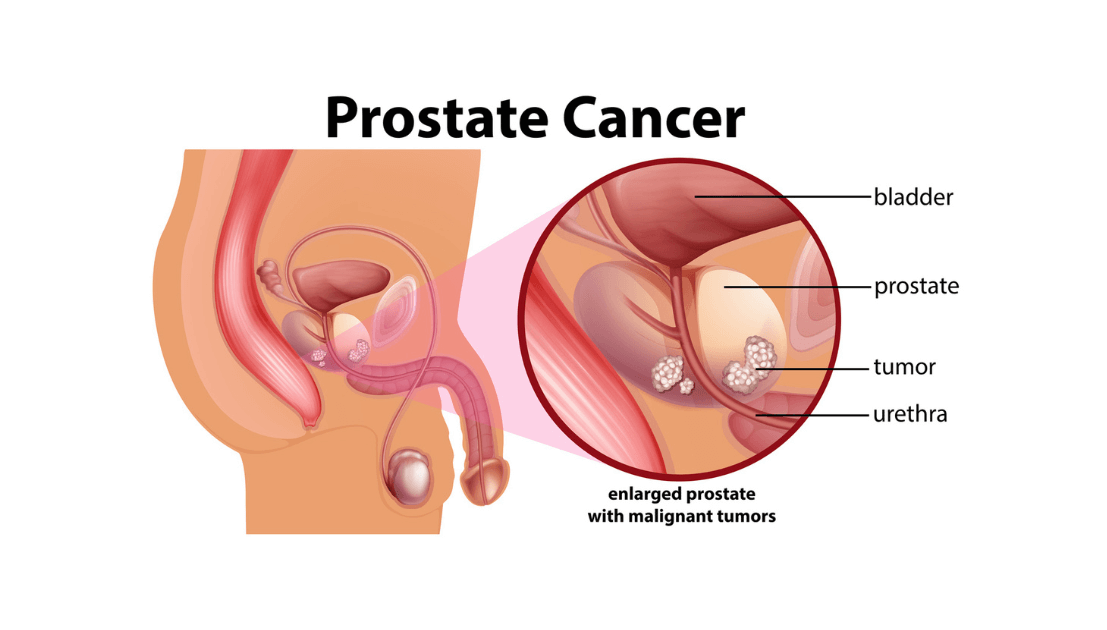
Above: Diagram showing prostate cancer tumors and surrounding structures.
Stage 3 – Locally Advanced
Cases where the prostate cancer has grown outside of the gland and into seminal vesicles and other nearby tissue are grouped into stage 3 prostate cancer. However in this stage, the cancer has not metastasized or spread to distant sites outside of the prostate gland.
Stage 3 prostate cancer is very concerning since there is a higher risk of recurrence and progression of cancer. The treatment options for stage 3 prostate cancer includes radiation, surgery, and clinical trials for high-risk patients. Since stage 3 prostate cancer is still very treatable, 95 percent of patients live for 5 years or more³.
How Long Can You Live With Stage 4 Prostate Cancer?

For the remaining 15 to 20 percent of cases in the advanced stage of prostate cancer, survival rates aren’t as promising. Stage 4 prostate cancer can present itself in various ways, including spreading to nearby organs (bladder, lymph nodes, etc.) and spreading to body parts outside of the pelvic region.
For this reason, roughly 50% of men survive with stage 4 prostate cancer after 5 years. However, with routine PSA testing and close monitoring of symptoms, prostate cancer is often caught and treated early and gives patients a high chance of a positive prognosis.
How to Screen for Prostate Cancer
Early screening and detection of prostate cancer is crucial to ensure the best outcomes for patients. Luckily with today’s advanced technology for prostate cancer detection, patients have confidence that their physician is able to screen and detect clinically-significant prostate cancer.
With MRI fusion technology, physicians see an accurate visualization of the prostate and can target various regions of the gland during the biopsy with precision. In fact, studies have shown that fusion biopsy systems are effective in targeting prostate cancer⁴.
Prostate Removal Side Effects
Choosing to have prostate removal surgery is a significant step, and it’s natural to be concerned about the potential side effects. The specific effects you experience will vary based on the type of surgery and your personal health. However, understanding the common side effects and the available solutions is key to feeling prepared and confident about your recovery journey.
Urinary Changes
It is very common to experience urinary issues immediately after prostate removal. This occurs because the procedure temporarily affects the muscles and nerves that control bladder function. The most common issue is loss of bladder control (urinary incontinence). While this can be distressing initially, most men see significant improvement in less than three months post-surgery⁵. Common symptoms include leakage, stronger urges to urinate, or difficulty fully emptying the bladder.
The good news is that this side effect is often temporary. Kegel exercises and physical therapy are effective tools your doctor will recommend to help strengthen your pelvic floor muscles and speed up your recovery.
Erectile Dysfunction
Another potential side effect is erectile dysfunction (ED), which is the inability to achieve or maintain an erection. The return of erectile function can take time, and a 2006 study found that most men saw their erectile function return within two years after surgery⁶.
Because these effects can be challenging, doctors have developed programs to help patients navigate these issues. Penile rehabilitation is a structured treatment program designed to sustain the health of the penile tissue following surgery⁷. This often involves medication taken over an 18 to 24-month period to help you regain sexual function and quality of life.
Fertility and Family Planning
The prostate gland is responsible for producing the fluid portion of semen. Consequently, removing the prostate results in the loss of semen production. After the surgery, natural conception will no longer be possible.
If having children in the future is a priority for you, sperm banking before your surgery is an excellent option. We encourage you to discuss any fertility concerns with your physician and consult with a fertility expert well in advance of your procedure for effective family planning.
The Bottom Line
So, how long can you live with stage 4 prostate cancer? Each case of prostate cancer is different, which means life expectancy varies. However, roughly 50 percent of stage 4 prostate cancer patients live 5 years or more. Some people live many years with metastatic prostate cancer, especially with newer systemic therapies. Your care team can help you understand what’s most likely in your situation.
Ask your urologist about KOELIS, or find a certified provider in our network with our KOELIS Locator.
References
1 – Albertsen PC, Fryback DG, Storer BE, Kolon TF, Fine J. Long-term survival among men with conservatively treated localized prostate cancer. JAMA. 1995 Aug 23-30;274(8):626-31. PMID: 7637143.
2 – Prostate Cancer Prognosis. Johns Hopkins Medicine. https://www.hopkinsmedicine.org/health/conditions-and-diseases/prostate-cancer/prostate-cancer-prognosis
3 – Survival for prostate cancer. Cancer Research UK. https://www.cancerresearchuk.org/about-cancer/prostate-cancer/survival
4 – Cornud F, Roumiguié M, Barry de Longchamps N, Ploussard G, Bruguière E, Portalez D, Malavaud B. Precision Matters in MR Imaging-targeted Prostate Biopsies: Evidence from a Prospective Study of Cognitive and Elastic Fusion Registration Transrectal Biopsies. Radiology. 2018 May;287(2):534-542. doi: 10.1148/radiol.2017162916. Epub 2018 Jan 22. PMID: 29361246.
5 – 2 – Incontinence After Prostate Surgery. Cleveland Clinic. https://my.clevelandclinic.org/health/symptoms/incontinence-after-prostate-surgery
6 – Dall’era JE, Mills JN, Koul HK, Meacham RB. Penile rehabilitation after radical prostatectomy: important therapy or wishful thinking? Rev Urol. 2006 Fall;8(4):209-15. PMID: 17192800; PMCID: PMC1751036.
7 – Emanu JC, Avildsen IK, Nelson CJ. Erectile dysfunction after radical prostatectomy: prevalence, medical treatments, and psychosocial interventions. Curr Opin Support Palliat Care. 2016 Mar;10(1):102-7. doi: 10.1097/SPC.0000000000000195. PMID: 26808052; PMCID: PMC5005072.