

 English
 German
 Spanish
 Italian
 Japanese
 United states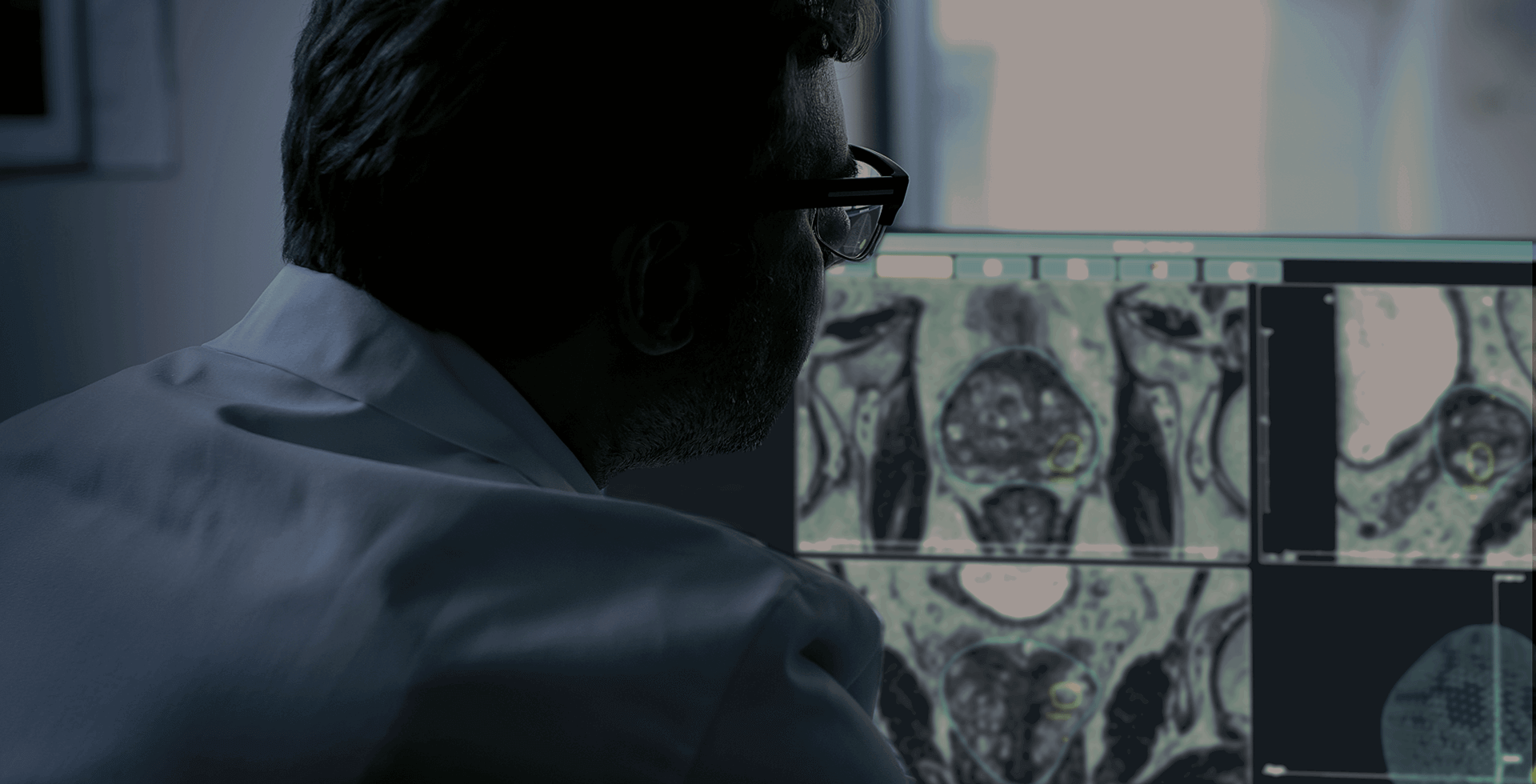
Whether you’re a concerned patient, a loved one of someone with prostate cancer, or a medical professional, knowing and understanding the prostate MRI for prostate cancer screening is essential if you wish to have have a comprehensive understanding of this common cancer.
Screening for prostate cancer has never been more effective and minimally invasive as it is today. Coupled with MRI-ultrasound technology, the prostate MRI fusion biopsy is proven to enhance diagnostic accuracy, detect more instances of prostate cancer, and ensure patient comfort with minimal complications post-biopsy¹.
Are you looking to learn more about prostate MRI? This article discusses the basics of prostate MRI, how it works, and three things you need to know about the prostate MRI today.
What is a Prostate MRI?

You may have heard of MRI if you or someone you know broke a bone or had certain forms of cancer. An MRI (short for magnetic resonance imaging) is an advanced method for radiologists and physicians to visualize structures with soft tissue inside the body. As it relates to prostate cancer, a prostate MRI is used to inspect the prostate for MRI-visible lesions containing prostate cancer.
Once the MRI is performed, a radiologist analyzes the images to determine whether or not lesions shown on the MRI contain cancer. If the radiologist deems that cancer is likely, the patient will be instructed to have a prostate biopsy performed to test the suspected lesions for cancer.
Physicians using MRI-ultrasound fusion technology use the MRI of the prostate gland when performing the prostate biopsy. The MR images are loaded onto the fusion biopsy system and fused with a live ultrasound for complete co-registration of both images. This real-time 3D MRI fusion accounts for prostate deformation and patient movement, which means physicians can be confident they are targeting regions of the prostate accurately.
“The prostate MRI is a critical step in the diagnosis and screening process for prostate cancer. A prostate MRI is used to inspect the prostate gland for visible lesions containing prostate cancer.”
AI Prostate Cancer MRI
Using artificial intelligence (AI) technology, it’s now possible to segment the regions of the prostate with an AI prostate cancer MRI. Software companies like Bot Image™ are leading the way in the fight against prostate cancer as North America’s first FDA-cleared prostate cancer screening and detection software.
With Bot Image, MR images are uploaded to the secure platform and, in 15 minutes or less, Bot Image produces a PDF document that displays PI-RADS score, Gleason score, and additional information about the patient and his cancer diagnosis. Using this breakthrough software, physicians understand the aggressiveness of the suspected cancer and have better visualization of where to target during biopsy.
How Does a Prostate MRI Work?
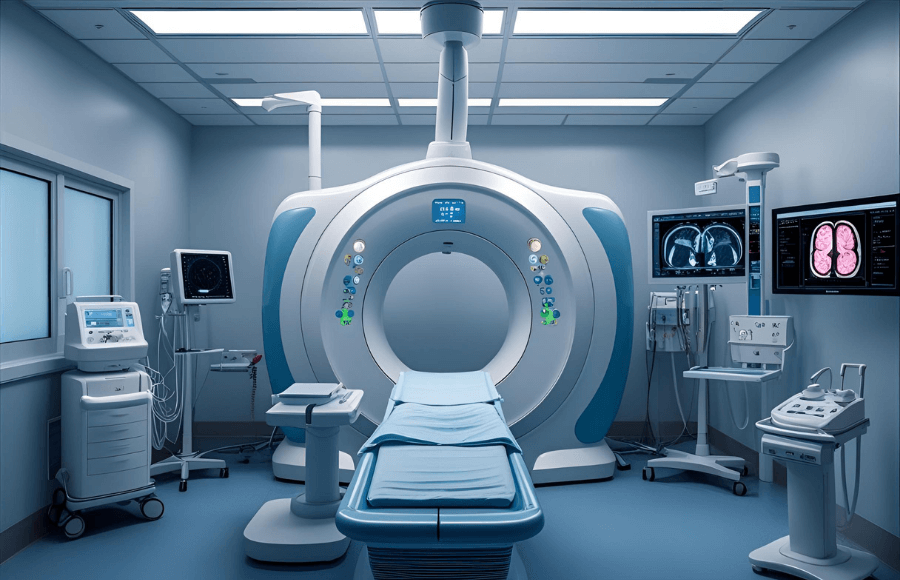
The prostate MRI is a non-invasive procedure that uses magnetic fields and radio waves to create and analyze detailed images of the prostate and surrounding tissue outside the gland. The purpose of the MRI is to aid urologists in prostate cancer diagnosis and to evaluate the extent of the advancement of the disease.
An MRI shows a detailed anatomy of the prostate in an image that clearly outlines the size and shape of the gland. Using a prostate MRI, radiologists identify the severity of cancer and the likelihood of spreading to nearby tissue to help guide surgical or focal therapy treatment.
While there are several types of prostate MRIs, modern imaging is multiparametric (mpMRI) and has significantly impacted prostate cancer detection and risk classification methods². The mpMRI uses multiple sequences to evaluate different tissue characteristics within the prostate and shows anatomy in high detail with outlined zones of the prostate³.
A prostate MRI procedure takes about 30-45 minutes with the patient laying flat on the MRI scanner. Patients can resume normal daily activity after the MRI unless instructed otherwise by their physician.
When is a Prostate MRI Needed?
An MRI is commonly performed as the first step in prostate cancer diagnosis. The most common instance where a prostate MRI is needed is when a patient shows elevated PSA levels after a PSA blood test⁴. In this case, the MRI helps to identify specific lesions for the radiologist to analyze to determine whether or not a prostate biopsy is needed.
If the prostate biopsy shows a low-to-intermediate risk case of prostate cancer, patients may be instructed to proceed with active surveillance, which is the consistent monitoring of prostate cancer progression to determine whether future cancer treatment is necessary to stop the spread of the disease. If treatment is required, patients will work with their physician to determine the best course of action for their specific circumstances.
3 Things to Know About Prostate MRIs
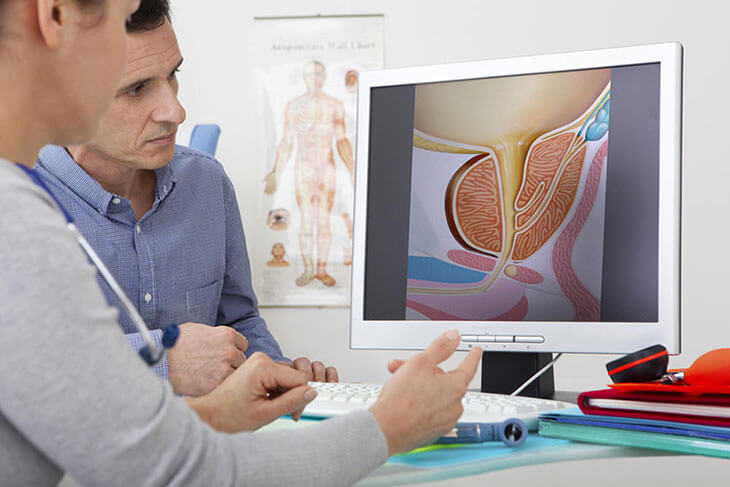
Now that you understand the basics of the prostate MRI, let’s talk about three things to know that are helpful for both patients and medical professionals looking to learn more about the evolving field of prostate cancer treatment and detection.
#1 – The Prostate MRI Reduces Overtreatment
Pre-biopsy MRI has become the standard procedure for patients with elevated PSA levels. Suspicious lesions (PI-RADS 3-5) are identified with the prostate MRI and help to triage patients who truly need a biopsy from those who will benefit from deferring invasive procedures.
When paired with MRI-ultrasound fusion platforms, the prostate MRI allows precise sampling of lesions and reduces overtreatment of indolent disease.
#2 – MRI is Valuable for Recurring Disease
When PSA rises following radical prostatectomy or focal therapy, MRI can help localize recurrence in the prostate bed, seminal vesicle remnants, or surrounding tissues. In some cases, MRI findings direct salvage therapy decisions or additional imaging workup.
#3 – MRI Fusion Biopsy Enhances Accuracy
As proven in clinical studies, biopsies performed using MRI-fusion guidance detect more instances of clinically-significant prostate cancer than non-fusion systems. One 2018 study concluded that MRI fusion systems achieved higher precision and detected cancer in more patients than traditional approaches.
The Bottom Line
The prostate MRI and biopsy has come a long way since prostate cancer screening began. What started with painful incisions during the prostate biopsy has evolved into minimally invasive biopsy and treatment options for patients.
With the help of pre-biopsy MRI, physicians and radiologists now have the tools they need to make accurate cancer diagnoses and ensure the highest quality patient care for those dealing with prostate cancer.
Ask your urologist about KOELIS, or find a certified provider in our network with our KOELIS Locator.
Sources & References
1 – Cornud F, Roumiguié M, Barry de Longchamps N, Ploussard G, Bruguière E, Portalez D, Malavaud B. Precision Matters in MR Imaging-targeted Prostate Biopsies: Evidence from a Prospective Study of Cognitive and Elastic Fusion Registration Transrectal Biopsies. Radiology. 2018 May;287(2):534-542. doi: 10.1148/radiol.2017162916. Epub 2018 Jan 22. PMID: 29361246.
2 – Demirel HC, Davis JW. Multiparametric magnetic resonance imaging: Overview of the technique, clinical applications in prostate biopsy and future directions. Turk J Urol. 2018 Mar;44(2):93-102. doi: 10.5152/tud.2018.56056. Epub 2018 Mar 1. PMID: 29511576; PMCID: PMC5832385.
3 – Bucher AM, Egger J, Dietz J, Strecker R, Hilbert T, Frodl E, Wenzel M, Penzkofer T, Hamm B, Chun FK, Vogl T, Kleesiek J, Beeres M. Value of MRI – T2 Mapping to Differentiate Clinically Significant Prostate Cancer. J Imaging Inform Med. 2024 Dec;37(6):3304-3315. doi: 10.1007/s10278-024-01150-6. Epub 2024 Jun 26. PMID: 38926263; PMCID: PMC11612117.
4 – The Prostate-Specific Antigen (PSA) Blood Test. WedMD. https://www.webmd.com/prostate-cancer/psa