

 English
 German
 Spanish
 Italian
 Japanese
 United states
Prostate cancer continues to be one of the most common cancers among men today. In fact, 1 in 8 men will have prostate cancer during their lifetime. However, treating prostate cancer today is much different than it was even just ten years ago. Technological advancements, innovative medical equipment, and a better understanding of prostate cancer allows medical professionals to target and treat prostate cancer better than ever before.
One of the best and most effective prostate cancer treatments is focal therapy¹. This prostate cancer treatment method comes in several forms and has emerged as a promising approach aimed at treating clinically significant cancer while minimizing damage to surrounding healthy tissue.
Unlike traditional treatments such as radical prostatectomy or whole-gland radiation, focal therapy selectively ablates only the areas of the prostate with suspected cancer. This approach intends to strike a balance between eliminating cancer and the preservation of quality of life for patients with localized and intermediate-risk disease.
Ready to learn more about focal therapy for prostate cancer? This article discusses several types of focal therapy, focal therapy alternatives, and more information to help you gain a full understanding of focal therapy for prostate cancer.
What is Focal Therapy for Prostate Cancer?
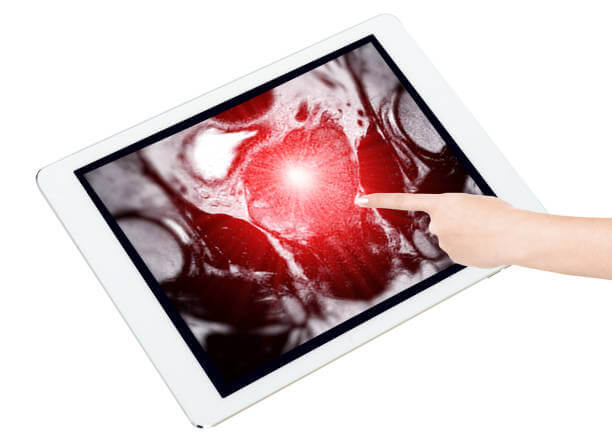
As we mentioned, focal therapy is a highly-specialized targeted treatment approach for localized prostate cancer². This treatment method aims to only destroy the cancerous parts of the prostate to preserve the function and quality of life of the patient. Alternative treatment methods, as we’ll discuss, often come with harmful side effects, while focal therapy aims to reduce patient discomfort and recovery times.
One of the key principles of focal therapy is the precision treatment method of only targeting the clinically significant prostate cancer tissue. Urologists find these lesions when performing a prostate cancer biopsy to screen for the presence of cancer. Today, many urologists use MRI fusion devices for enhanced imaging and targeting capabilities not available with traditional methods.
One of the main benefits to focal therapy vs. traditional cancer treatment methods is that focal therapy procedures are minimally invasive when using image-guided techniques that allow for faster recovery and fewer complications.
“Alternative treatment methods come with harmful side effects, while focal therapy aims to reduce patient discomfort and recovery times.”
Types of Focal Therapy
Now that you have a solid understanding of focal therapy and prostate cancer, it’s time to talk about specific types of focal therapy, how they are used, and how they differ from traditional prostate cancer treatment methods.
Cryotherapy
Cryotherapy (also known as cryogenic ablation or cryosurgery) is a focal therapy procedure that uses high-powered medical equipment to destroy cancerous tissue by freezing lesions within the prostate. Cryotherapy is one of the most common focal therapy treatment methods due to its ability to achieve cancer control while minimizing harmful side effects.
A cryotherapy procedure starts with the patient in a lithotomy position and typically under general anesthesia. The physician inserts specialized cryotherapy needles into the prostate gland, often using ultrasound-guided medical devices. Compressed gas then forms ice balls around the cancerous lesions at extremely cold temperatures. The cryotherapy procedure may take anywhere from 45 minutes to 2 hours depending on the size of cancerous tissue.
After the ice balls form around the targeted cancer lesions, the tissue must thaw to ensure full ablation. Physicians monitor the extent of the ice ball and can effectively protect adjacent structures (urethra, rectum, etc.) from damage.
High-Intensity Focused Ultrasound (HIFU)
Another effective and emerging focal therapy treatment method is high-intensity focused ultrasound, better known as HIFU. This method is an advanced therapy that uses focused sound waves to thermally ablate areas of the prostate with suspected cancer. Much like cryotherapy, HIFU is often performed using MRI ultrasound devices for advanced imaging and treatment capabilities.
HIFU is adopted across the US, Europe and Asia, which means it’s highly effective and proven at localized prostate cancer treatment. It works by using focused ultrasound waves to generate intense heat directed at targeted areas in the prostate.
The procedure is done similarly to cryotherapy with the patient in a lithotomy position. An ultrasound probe is inserted into the rectum to allow for visualization of the prostate. Ultrasound imaging is often co-registered with MRI data to plan and guide ablation zones. The physician then starts the intense thermal energy that destroys tissue at the targeted locations. A HIFU procedure is often performed in a single session with quick patient recovery. No incisions are made with HIFU and there are minimal side effects after the procedure.
Irreversible Electroporation (IRE)
The next focal therapy method we’ll discuss is irreversible electroporation (IRE). As opposed to using thermal energy, IRE uses electrical energy to destroy cancerous cells within the prostate. This method is particularly effective for cancerous lesions located near critical structures such as the neurovascular bundles and urethral sphincter.
IRE works by administering short pulses of electrical current at high-voltage to the targeted lesion with electrode needles placed transperineally. Using MRI-ultrasound fusion, electrical pulses are applied in rapid bursts, leading to apoptotic cell death. Since no thermal energy is used with IRE, connective tissue and nerves are typically well-preserved.
While IRE is an effective focal therapy treatment method, it is much newer than cryotherapy and HIFU. Data on long-term outcomes and randomized comparisons are still emerging in the medical field. Additionally, IRE requires specialized equipment like MRI-ultrasound devices and comprehensive training to be performed successfully.
Focal Laser Ablation of the Prostate (FLA)
Another minimally invasive focal therapy treatment for prostate cancer is focal laser ablation (FLA). This method uses laser fibers to ablate parts of the prostate identified as cancerous. This method is well-suited for MRI-visible lesions and is ideal for its ability to preserve healthy sexual and urinary function⁴.
Like other focal therapy methods, pre-procedure planning with MRI-ultrasound equipment is used to locate the regions of the prostate with cancerous tissue. Laser fibers (often 1.5mm or less) are inserted transperineally into the tumor with a template grid, and the laser emits controlled heat to destroy the tumor.
FLA paired with MRI-ultrasound guidance provides precision targeting and accuracy during fiber placement and ablation. The procedure also doesn’t prevent any future treatment options if needed in follow up care.
“Focal therapy is intended to treat clinically significant cancer while minimizing damage to surrounding healthy tissues.”
Focal Therapy Risks

While focal therapy is known for being minimally invasive and effective, there are several risks that come with this type of procedure.
Focal therapy isn’t always 100% effective at destroying prostate cancer. There may be several undetected or MRI-invisible lesions elsewhere in the prostate that are missed and therefore left untreated by focal therapy. This may result in future complications and additional focal therapy treatments.
Additionally, focal therapy is a relatively new treatment method for prostate cancer and long-term clinical data is still needed. Large, randomized controlled studies comparing focal therapy to radical prostatectomy and other treatment methods are still underway.
Lastly, ongoing surveillance of patients is still needed after focal therapy treatment. Patients often undergo frequent PSA testing and repeat prostate biopsies to ensure that the cancer doesn’t return or spread further.
Focal Therapy Alternatives
While focal therapy is a promising alternative to traditional treatments, there are other options to consider if focal therapy isn’t ideal for specific instances of prostate cancer.
Active Surveillance
As the name suggests, active surveillance is a treatment plan that involves carefully monitoring low-risk prostate cancer without intervention. Once detected, prostate cancer may not spread or cause significant disruption to quality of life and is therefore left untreated with active surveillance. Patients in active surveillance typically have PSA testing every three to six months along with digital rectal exams.
Active surveillance is best for low risk prostate cancer³, but patients may have negative side effects emotionally. Patients may feel they are “living with cancer,” which places a psychological burden on them that can be distressing.
Radical Prostatectomy
A radical prostatectomy is the surgical removal of the entire prostate gland. This treatment method is often used in patients with advanced prostate cancer and in men with long life expectancy and good health.
However, there are several downsides that come with a radical prostatectomy. Men may experience urinary incontinence, erectile dysfunction, infection, and bleeding after the surgery. Additionally, recovery time after a prostatectomy is longer than focal therapy and other conservative approaches.
The Bottom Line
Focal therapy for prostate cancer is an emerging field with promising data thus far. Men are able to treat their cancer effectively while still preserving the quality and standard of living they are accustomed to.
While more clinical data is needed, focal therapy remains a highly effective way to treat low-to-intermediate risk prostate cancer.
Ask your urologist about KOELIS, or find a certified provider in our network with our KOELIS Locator.
Sources & References
1. Marshall S, Taneja S. Focal therapy for prostate cancer: The current status. Prostate Int. 2015 Jun;3(2):35-41. doi: 10.1016/j.prnil.2015.03.007. Epub 2015 Mar 23. PMID: 26157765; PMCID: PMC4494637.
2. Atluri S, Mouzannar A, Venkatramani V, Parekh DJ, Nahar B. Focal therapy for localized prostate cancer – Current status. Indian J Urol. 2022 Jan-Mar;38(1):7-14. doi: 10.4103/iju.iju_166_21. Epub 2022 Jan 1. PMID: 35136289; PMCID: PMC8796757.
3. https://www.hopkinsmedicine.org/health/conditions-and-diseases/prostate-cancer/active-surveillance-for-prostate-cancer
4. Walser E, Nance A, Ynalvez L, Yong S, Aoughsten JS, Eyzaguirre EJ, Williams SB. Focal Laser Ablation of Prostate Cancer: Results in 120 Patients with Low- to Intermediate-Risk Disease. J Vasc Interv Radiol. 2019 Mar;30(3):401-409.e2. doi: 10.1016/j.jvir.2018.09.016. PMID: 30819483; PMCID: PMC8503805.