

 English
 German
 Spanish
 Italian
 Japanese
 United states
As one of the leading prostate cancer device manufacturers in the world, one of the most common questions we receive is “do women have a prostate?” While the question may seem simple on the surface, the answer is actually much more nuanced than a simple yes or no.
Depending on the source, some online information says that women do not have a prostate. Other websites from leading medical publications say that women indeed have a prostate, but it functions differently than the male prostate.
So, do women have a prostate? Let’s talk about the female prostate, if it exists, and why there are so many misconceptions about this topic.
What is a Prostate?
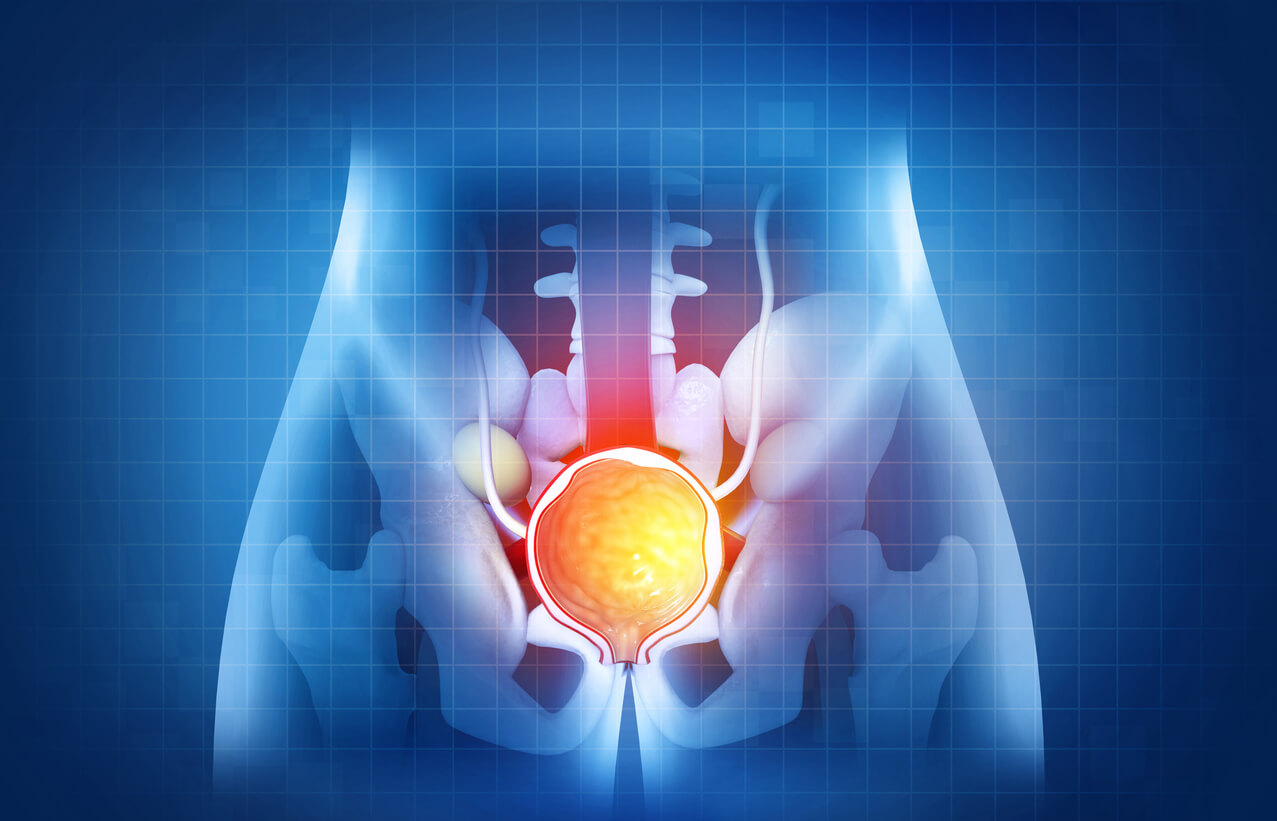
Before we talk about the female prostate, it’s important to understand what the prostate is and why humans have come to develop this organ.
When you hear people talk about the prostate, prostate cancer, or prostate biopsy, they are almost always referring to the male prostate. This walnut-shaped gland is primarily responsible for producing prostatic fluid and plays a major role in male reproduction. Anatomically speaking, the male prostate is located just below the bladder and surrounds the upper part of the urethra.
In addition to its reproductive role, the prostate has clinical significance, particularly in older men. Conditions such as benign prostatic hyperplasia (BPH), prostatitis, and prostate cancer are common reasons for urologic evaluation and treatment. Additionally, prostate-specific antigens (PSA) are present in the prostate gland, and high PSA levels are an early indicator of the presence of prostate cancer¹.
In asking whether women have a prostate, it is essential to first understand what the prostate is, both anatomically and functionally. While the prostate is traditionally considered a male-specific organ, its embryologic origin, physiological role, and biomolecular output provide a framework for exploring its female counterpart — the Skene’s glands.
“While women do not have a prostate gland in the same anatomical sense as men, they do have Skene’s glands. Many leading medical publications recognize the Skene’s glands as the female equivalent of the prostate.”
The Female Prostate

One of the most misunderstood organs in human anatomy is the female prostate, and we come back to the question “do women have a prostate?” Let’s discuss this question in detail and provide a solid answer that will help understand the role of the female prostate and why it’s slightly different than its male counterpart.
While the prostate gland is classically considered a male-specific organ, the female body contains a set of structures known as the Skene’s glands (also known as the paraurethral glands) which are widely recognized as the anatomical and functional counterpart to the male prostate².
Anatomy of the Female Prostate
The Skene’s glands are located on the anterior vaginal wall near the lower end of the urethra. These glands open into the urethra and are situated adjacent to the external urethral orifice. Because of their proximity to the urinary tract, they are sometimes mistakenly associated with urinary function. In reality, they are actually glandular structures with secretory activity.
The Skene’s glands originate from the urogenital sinus, the same developmental tissue from which the male prostate arises. This forms the basis for considering these glands the “female prostate.” Just as male and female genitalia share embryonic roots, these glands represent a divergent but related development.
Why Are Skene’s Glands Known as the Female Prostate?
Several functional characteristics support the label “female prostate”, including the secretion of PSA and PAP. The Skene’s glands produce prostate-specific antigen (PSA) and prostatic acid phosphatase (PAP), which are considered exclusive markers of the male prostate.
Another reason why Skene’s glands are known as the female prostate is because these glands contain glandular tissue similar in architecture to the male prostate. Although the Skene’s glands are much smaller and less studied than the male prostate, their anatomical and biochemical similarities support their classification as a prostate equivalent.
Can Women Get Prostate Cancer?

Now that you understand the nuance of the question “do women have a prostate,” you may be wondering whether women can get prostate cancer. Let’s learn a little bit more about male prostate cancer to understand the basics of this disease.
Prostate cancer is one of the most common forms of cancer amongst men. In fact, roughly 1 in 8 males will receive a prostate cancer diagnosis in their lifetime. Despite this, prostate cancer is very treatable when caught early, and some forms of prostate cancer require no treatment at all (known as active surveillance).
Most prostate cancer diagnoses occur in older men who have a history of prostate cancer in their family. Treatment for prostate cancer includes focal therapy (cryotherapy, IRE, HIFU, etc.) or radical prostatectomy (removal of the prostate). Like we mentioned, many men go on to live healthy lives with no treatment required after diagnosis.
So, can women get prostate cancer? Yes, but it is quite rare. The female equivalent of prostate cancer is when the Skene’s glands become cancerous and require treatment. However, one study in Frontiers in Oncology notes there have only been 20 reported cases of Skene’s gland carcinoma throughout scientific literature⁴.
“Can women get prostate cancer? Yes, but it is quite rare and only 20 cases of Skene's gland carcinoma have been reported.”
Common Misconceptions

There are lots of misconceptions and conflicting information on the web when it comes to understanding the female prostate. Let’s tackle a few of them:
#1 – Only Men Have a Prostate
If you’ve gotten this far, you know that we’ve debunked this misconception and proved that women in fact do have a prostate. As you’ve learned, the Skene’s glands function in a similar way to the male prostate and are often considered to be the female equivalent. However, anatomically speaking, females do not have the same prostate organ found in males.
#2 – The Female Prostate Doesn’t Do Anything Important
False. The female prostate (Skene’s glands) has a very important function for women’s urological health. They play a major part in reproductive functions, urogenital health, and the susceptibility to cysts and infections.
#3 – Women Cannot Get Prostate Cancer
While cancer in the Skene’s glands is extremely rare, it’s possible for women to get cancer. There is no known prevention of prostate cancer, but many physicians recommend eating a balanced diet and exercising in order to reduce the risk as you age. Staying away from the ten worst foods for prostate health is also an important factor.
The Short Answer
While women do not have a prostate gland in the same anatomical sense as men, they do have Skene’s glands (often referred to as the female prostate).
These glands are located near the urethra and are homologous to the male prostate since they produce similar secretions and share some physiological functions. Many leading medical publications recognize the Skene’s glands as the female equivalent of the prostate².
Want to learn more about prostate cancer and prevention?
KOELIS is a leader and pioneer in the treatment and prevention of prostate cancer. While prostate cancer primarily affects men, KOELIS is committed to advancing the technology and innovation when it comes to prostate cancer treatment.
Sources & References
1. Prostate-specific antigen (PSA) levels by age: What to know. Lisly Chéry, M.D. MD Anderson Cancer Center. 2024. https://www.mdanderson.org/cancerwise/prostate-specific-antigen–psa–levels-by-age–what-to-know.h00-159695967.html
2. Skene’s Gland. Cleveland Clinic. https://my.clevelandclinic.org/health/body/24089-skenes-gland
3. Gao Q, Liu X, Ye L, Lv T, Teng Y, Lan J, Li T, Tian M, Chen J, He S, Xie S, Zou Y. Adenosquamous Carcinoma of Skene’s Gland: A Case Report and Literature Review. Front Oncol. 2022 Aug 9;12:893980. doi: 10.3389/fonc.2022.893980. PMID: 36016628; PMCID: PMC9396410.
4. Flamini MA, Barbeito CG, Gimeno EJ, Portiansky EL. Morphological characterization of the female prostate (Skene’s gland or paraurethral gland) of Lagostomus maximus maximus. Ann Anat. 2002 Jul;184(4):341-5. doi: 10.1016/S0940-9602(02)80051-6. PMID: 12201043.