
 English
 German
 Spanish
 Italian
 Japanese
 United states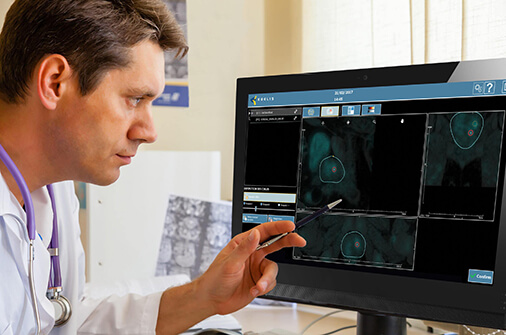
Prostate care management is the second most frequent male cancer1. However, it is often diagnosed “by chance”, during a routine exam. As we know, when symptoms show up, it can be too late to benefit from all treatment options. This is why a lot of physicians insist on “early screening”.
How to diagnose prostate cancer?
The diagnosis of prostate cancer is based on several essential steps. Today, different approaches make it possible to detect the disease at an early stage.
- Digital rectal exam: it allows the physician to assess the shape, the size and the texture of the prostate. If iany abnormalities are detected, the physician will ask for a PSA test.
- PSA test: this blood test measures the level of prostate-specific antigen (PSA). PSA is a protein produced by cancerous and noncancerous tissue in the prostate. Elevated PSA may indicate the presence of prostate cancer.
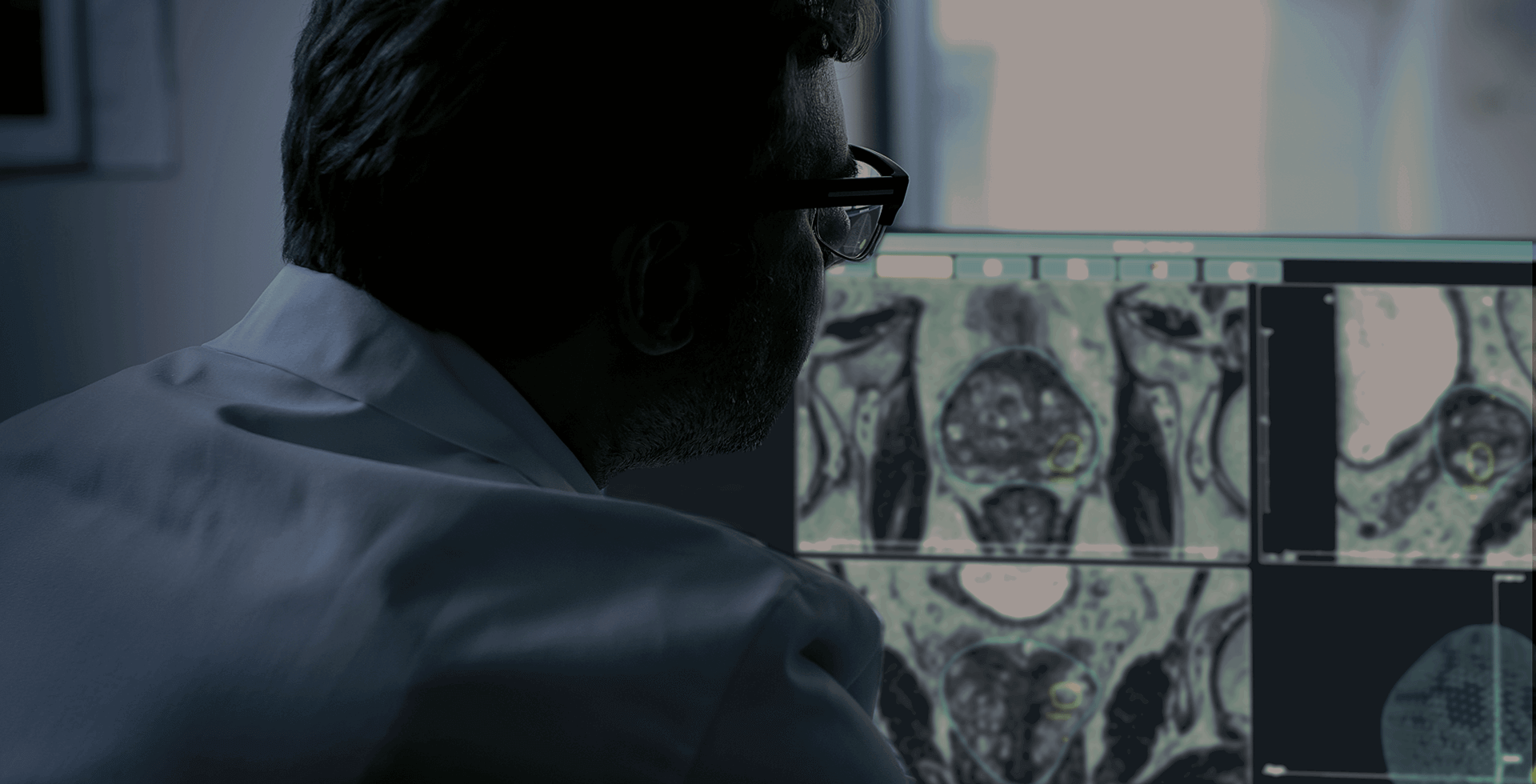
- MRI scan: when PSA level is suspicious, urologists may prescribe MRI scan. MRI scans provides detailed pictures from multiple angles and shows up clearly soft tissues. The multiparametric MRI (mpMRI) is a special type of MRI scan that produces a more detailed picture of the prostate gland compared to a standard MRI scan.
- Biopsy: a prostate biopsy involves using a thin needle to take small samples of tissue from the prostate. The tissue is then examinded under a microscope to check for cancer and for the grade.
Biopsy is today the only way to find out for certain if you have prostate cancer2. It can be performed by two approaches:
- Transperineal biopsy: it consists of sampling tissue to look for cancer cells in the prostate, by passing a needle through the perineal skin.
- Transrectal biopsy: it consists of sampling tissue to look for cancer cells in the prostate, by passing a needle through the rectum.
Today, EAU and AUA guidelines are recommended transperineal approach, particulary transperineal biopsy under local anesthesia. However, each approach is efficient to diagnose prostate cancer. To go further on this topic, we recommend the article “Transperineal prostate biopsy under local anesthesia: get optimal patient outcomes”.
Why is early diagnostic important?
Now we know how to diagnose prostate cancer, let’s talk about the importance of early diagnostic. As we mentioned earlier, prostate cancers are often discovered randomly during a medical exam. Sometimes, the disease is too advanced to be cured, sometimes, it is still time to cure it. It is important to remind the later we detect the cancer, the higher the risk of it becoming metastatic. Getting a test can be scary for patients, but it is the urologist’s role to provide reassurance and explain that the earlier prostate cancer is diagnosed, the more treatment option are available.
“There's a lot of controversy behind PSA testing, and that I think we need to be careful about not just throwing away the PSA test, because it's actually one of the best biomarkers.”
– Dr Michael Liss, USA.
Screening is also a way to get more information about the disease, and as we know, information is power. Physicians can use this knowledge to decide what to do next: which exam to do, which treatment to choose…
“We have to get the test and then knowledge is power. And then we use that knowledge to risk assess. that patient on whether they need more procedures or not. And so, sure, it's going to be changing all the time, and we need to stay up and still continue to push the field on how we diagnose prostate cancer.”
– Dr Michael Liss, USA.
This can avoid over or under diagnostic and help men to keep longer their life’s comfort.
Is early diagnostic a way to reduce costs?
By reducing unnecessary procedures, early diagnosis could potentially lower the overall cost of prostate cancer care. We know that most costs related to cancer are at the very end, with therapies (chemotherapies, immunotherapies…). Detecting prostate cancer early could help avoid these costly therapies. In theory, if we can stop the progression of prostate cancer, it could reduce costs, but there is no data about this, making it largely speculative.
“Early detection, again, is winning, not only for your options, but cure rates are better, and cost in the long run would probably be better as well.”
– Dr Michael Liss, USA.
Technologies’ roles in early prostate cancer diagnosis
For biopsy procedures, MRI plays a crucial role in placing the needle in the accurate location. A technique known as targeted biopsies. As it is already an invasive procedure for men, reducing the number of samples is better. Urologists still perform systematic biopsy to make sure they are not missing any lesions, but MRI targeted biopsies help doctors to better diagnose prostate cancer. Improving quality of MRI image is key to ensure a good diagnostic, it is the future of prostate care.
Artificial intelligence is also a big shift for healthcare professionals. It can help urologists in their daily practice(taking notes, pre-analyzing images…). Doctors should not be afraid of AI, but they need to be trained and to learn how to handle it.
“It's not a us or them or us versus machines. We need to be learning how to use them better and how can we enhance the experience.”
– Dr Michael Liss, USA.
Innovations and technologies are the best allies to preserve patients’ quality of life. But early diagnostic is the first step to cure prostate cancer.
Sources :
-
- Podcast of Dr Michael Liss (https://podcast.ausha.co/prostate-talk/prostate-cancer-early-diagnosis-for-better-care)
- 1 https://www.wcrf.org/preventing-cancer/cancer-statistics/prostate-cancer-statistics/
- 2 https://prostatecanceruk.org/prostate-information-and-support/prostate-tests/prostate-biopsy#:~:text=A%20prostate%20biopsy%20involves%20using,to%20spread%20outside%20the%20prostate.